
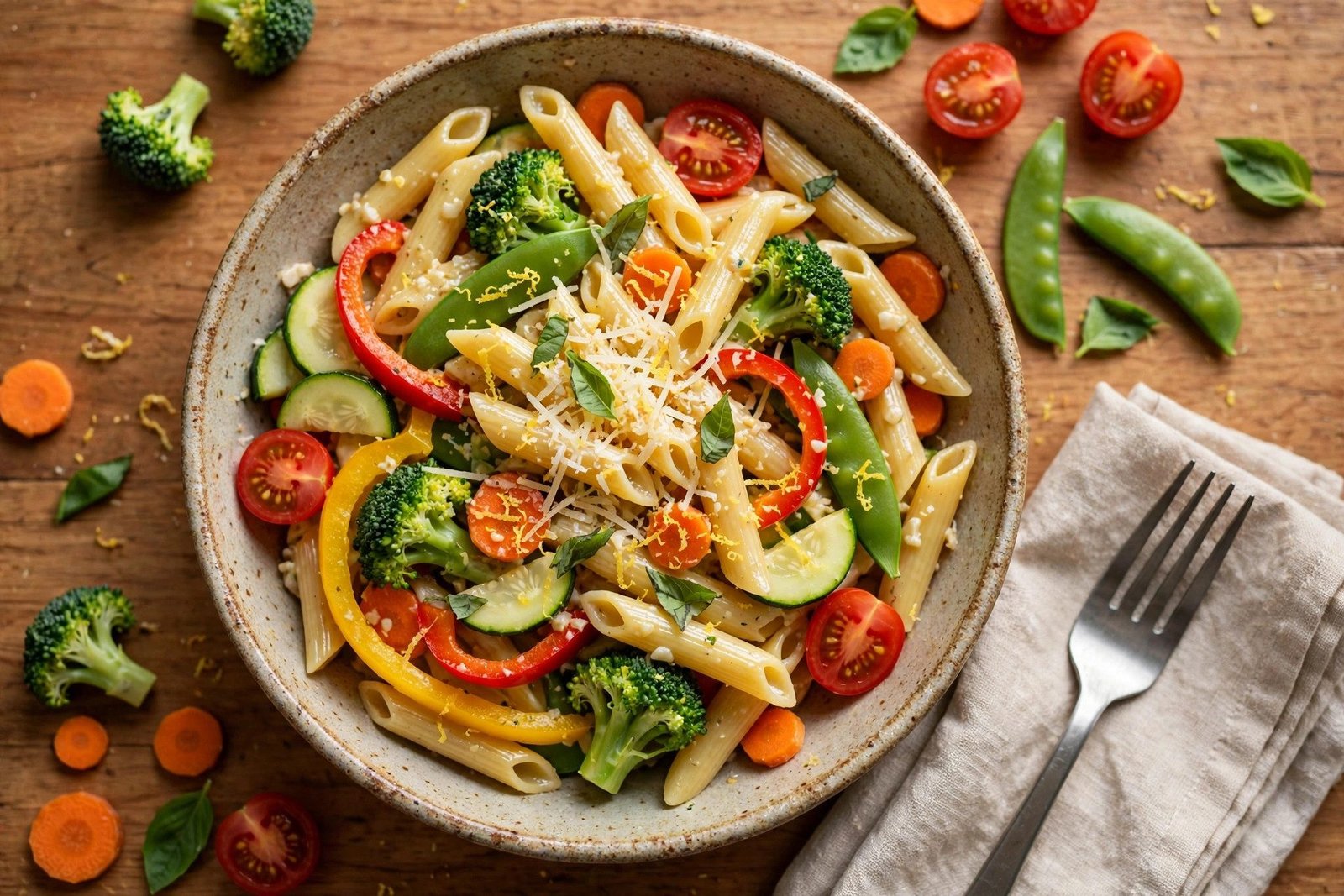
Some nights I open the fridge, see a drawer full of vegetables, and know exactly what dinner is going to be. This pasta primavera is one of those dinners — the kind that turns whatever is in the crisper into something that tastes like a restaurant put it on the plate. The pasta cooks in one pot, the vegetables stay bright and crisp in the same pan, and a light garlic cream sauce pulls everything together in about twenty minutes. When people ask me for easy pasta dinners that actually feel like cooking, this is the first recipe I hand them.
What makes these easy pasta dinners work so well is the method, not a long ingredient list. The vegetables go into the pan in order of how long they take to cook, so the carrots are tender, the broccoli is bright green, and the snap peas still snap. The sauce is just garlic, cream, and parmesan — nothing fussy, nothing that needs reducing for half an hour. And the pasta water, that starchy liquid most of us pour down the drain, is the secret that makes the sauce cling to every piece of penne like it was made for it. Because it was. It is the dinner that made me believe easy pasta dinners could taste this good on a Tuesday.
Why You’ll Love These Easy Pasta Dinners
First, this pasta primavera is genuinely fast. Twenty minutes from the moment you put the water on to the moment you are twirling pasta onto plates. There is no marinating, no oven preheating, no waiting around for anything to thaw. If you can chop a few vegetables and boil pasta, you can make these easy pasta dinners tonight.
Second, it is flexible in the best way. The recipe below is my favorite combination, but the whole point of pasta primavera is using what you have. Zucchini in, asparagus out. Cherry tomatoes swapped for sun-dried. A handful of spinach wilted in at the end. The sauce does not care, and the vegetables do not argue. That is what makes these easy pasta dinners so useful on a busy week — the recipe bends to your fridge instead of the other way around.
Third, it feels lighter than most pasta dinners without tasting like a compromise. The cream is there, but it is a half cup, not a pint, and the vegetables do most of the talking. My family eats this pasta primavera and asks for seconds before they ask what is in it, which is how I know it is a keeper.
Finally, it is a one-pan dinner once the pasta is boiled, which means the washing up is a pot, a skillet, and a cutting board. On a weeknight, that matters almost as much as the flavor. These easy pasta dinners are built for real life, not for a photo shoot — although this one photographs beautifully, if that is your thing.
Ingredients for Easy Pasta Primavera
You need a short list, and most of it is probably in your kitchen already. Everything below makes a generous batch of easy pasta dinners for four people:
- 12 ounces penne pasta — penne holds the sauce in its tubes; rotini or farfalle work just as well
- 2 tablespoons olive oil — for sautéing the vegetables
- 4 garlic cloves, thinly sliced — sliced, not minced, so it perfumes the oil without burning
- 2 medium carrots, peeled and cut into thin coins — they take the longest, so they go in first
- 1 1/2 cups broccoli florets, cut small — small florets cook fast and catch the sauce
- 1 red bell pepper, sliced into thin strips
- 1 yellow bell pepper, sliced into thin strips
- 1 medium zucchini, halved lengthwise and sliced into half-moons
- 1 cup sugar snap peas, strings removed
- 1 cup cherry tomatoes, halved — they soften just enough to make the sauce taste like summer
- 1/2 cup heavy cream — the base of the light garlic cream sauce
- 3/4 cup freshly grated Parmesan cheese, plus more for serving — grate it yourself; the pre-grated kind does not melt smoothly
- 1 teaspoon lemon zest — from one lemon, it wakes the whole dish up
- 1 tablespoon fresh lemon juice
- 1/2 teaspoon red pepper flakes — just enough warmth; leave it out for kids
- 1/2 teaspoon kosher salt, plus more for the pasta water
- 1/4 teaspoon black pepper, freshly ground
- 1/4 cup fresh basil leaves, torn — stirred in at the very end
A quick note on the vegetables: cut them all roughly the same size so they cook evenly. The carrots are the only ones that get a head start, because they are the densest thing in the pan. Everything else is in and out in about five minutes, which is exactly how long it takes to keep vegetables crisp-tender instead of soggy. That texture is the whole point of these easy pasta dinners — if the vegetables go limp, the dish loses its spark.
For the pasta, salt the water like you mean it. A generous tablespoon of kosher salt in a big pot of water is what seasons the pasta from the inside out, and no amount of sauce fixes bland pasta. And before you drain, scoop out a cup of the pasta water. That cloudy, starchy liquid is liquid gold for the sauce — it loosens the cream, helps it cling, and turns a good pasta primavera into a great one.
How to Make Easy Pasta Primavera
Step 1: Boil the pasta
Bring a large pot of salted water to a rolling boil. Add the penne and cook until just shy of al dente — about one minute less than the package says, usually 9 to 10 minutes. The pasta will finish cooking in the sauce, and that last minute in the pan is what lets it drink up the flavor. Before draining, reserve 1 cup of pasta water. Drain the pasta and set it aside.
Step 2: Start the vegetables
While the pasta cooks, heat the olive oil in a large, deep skillet over medium-high heat until it shimmers. Add the carrots and cook for 2 minutes, stirring once or twice. They should start to soften at the edges but still have bite. This head start is the difference between tender carrots and crunchy ones in the finished easy pasta dinners.
Step 3: Add the rest of the vegetables
Add the broccoli and bell peppers to the skillet and cook for 2 minutes more. Then add the zucchini and snap peas and cook for another 2 minutes. The vegetables should be bright, glossy, and crisp-tender — a fork should go in with just a little resistance. If they look dull or soft, they have gone too far, so keep the heat up and the cooking time short.
Step 4: Bloom the garlic
Push the vegetables to the edges of the pan and add the sliced garlic to the center with a drizzle more oil if the pan looks dry. Cook for about 30 seconds, stirring constantly, until the garlic smells fragrant. Do not let it brown. Burned garlic turns bitter fast, and it will haunt the whole sauce of these easy pasta dinners.
Step 5: Build the sauce
Pour in the heavy cream and add the cherry tomatoes, red pepper flakes, salt, and black pepper. Let it bubble gently for 1 to 2 minutes, stirring, until the cream thickens slightly and the tomatoes start to soften and release their juices. You will know it is ready when it coats the back of a spoon. If it gets too thick, splash in a little of the reserved pasta water.
Step 6: Toss and finish
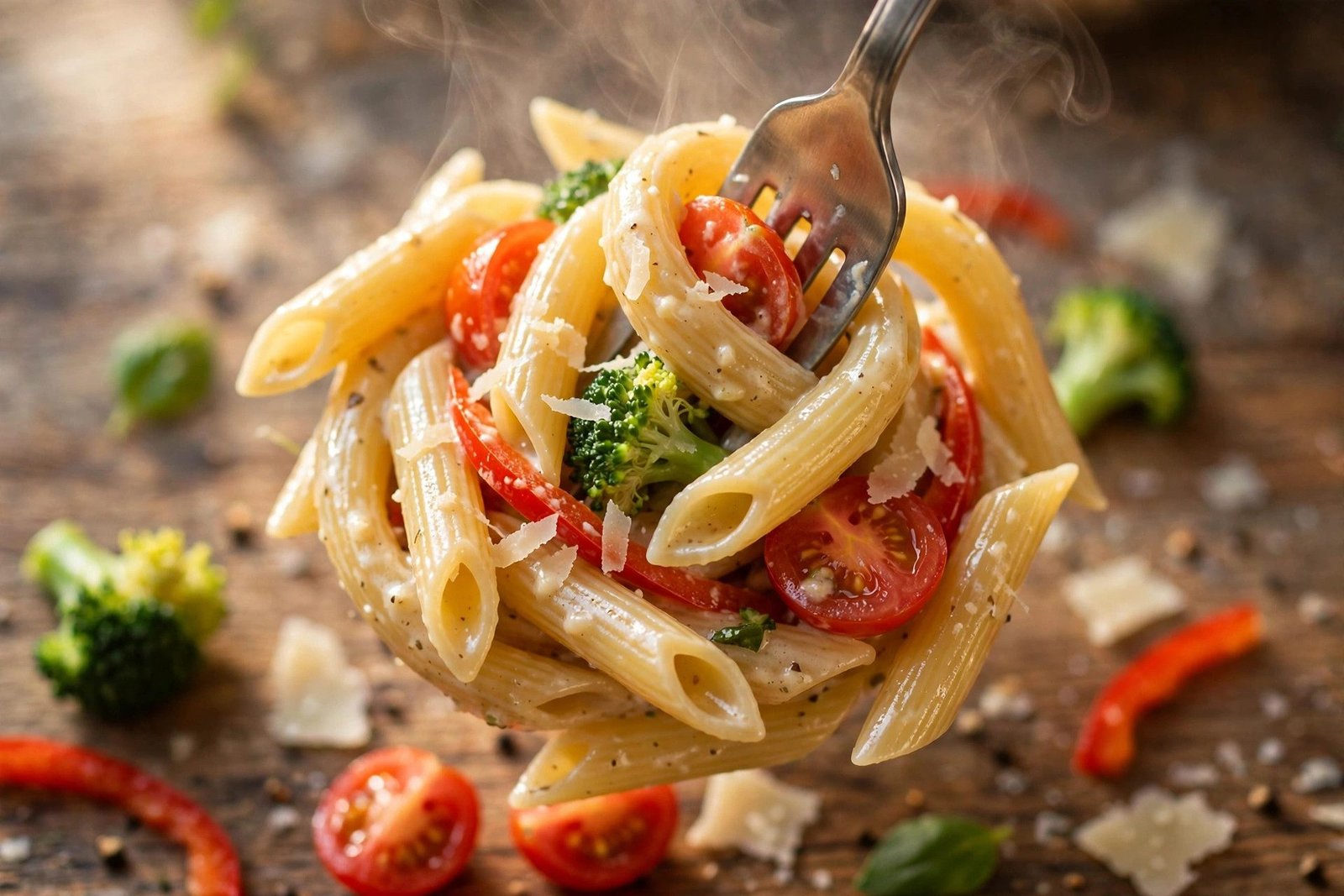
Add the drained pasta to the skillet along with the Parmesan, lemon zest, and lemon juice. Toss everything together for 1 to 2 minutes over medium heat, adding splashes of pasta water until the sauce turns silky and coats every piece of pasta. The pasta will finish cooking right in the sauce — that is the moment these easy pasta dinners come together. Take the pan off the heat, fold in the torn basil, and serve immediately with extra Parmesan on top.
Pro Tips for the Best Easy Pasta Dinners
A few small habits are what keep easy pasta dinners tasting like you spent an hour on them.
Cut the vegetables evenly. This is the single most important step for pasta primavera. Vegetables cut to the same size cook at the same rate, so nothing is raw while something else is mushy. Take the extra two minutes at the cutting board — your easy pasta dinners will taste like you did.
Do not overcook the vegetables. Crisp-tender is the goal, and the window is short. The vegetables keep cooking from residual heat even after the pan comes off the burner, so pull them when they still look a little underdone. They will be perfect by the time the pasta hits the table.
Undercook the pasta on purpose. One minute less than the package says, every time. Pasta that is already fully cooked before it meets the sauce turns soft and swollen. Pasta that finishes in the sauce absorbs flavor and holds its bite. This is the trick that separates good easy pasta dinners from great ones.
Save the pasta water. I say it in every pasta recipe because it matters in every pasta recipe. A few splashes of starchy pasta water turn a sauce that sits on top of the pasta into a sauce that clings to it. Keep a full cup by the stove and use as much as you need.
Grate your own Parmesan. The pre-grated kind has anti-caking agents that keep it from melting smoothly, and it can turn a cream sauce grainy. A block of Parmesan and a box grater take thirty seconds and the sauce will be silkier for it.
Zest before you juice. The lemon zest goes in with the pasta, and the juice goes in right after. Zest the lemon before you cut it — trying to zest a juiced half is a losing battle, and the zest is where most of the bright lemon flavor lives.
Easy Pasta Dinners Variations
This pasta primavera is a base, not a rule. That is the beauty of easy pasta dinners — the framework stays the same while the ingredients change. Here are the swaps I reach for most:
- Add protein: toss in a cup of shredded rotisserie chicken, a can of drained chickpeas, or some quickly sautéed shrimp in the last two minutes. Any of them turns these easy pasta dinners into a heartier main without adding real cooking time.
- Make it spicy: double the red pepper flakes, or add a pinch of Calabrian chili paste with the garlic for a slow, warm heat.
- Go dairy-free: swap the cream for full-fat coconut milk and use nutritional yeast or a dairy-free Parmesan in place of the cheese. The sauce stays silky and the vegetables still shine.
- Use what is in season: asparagus and peas in spring, corn and green beans in summer, butternut squash and mushrooms in fall. Pasta primavera means “spring pasta,” but nobody is checking the calendar — the method works with any vegetable that cooks in five minutes or less.
- Add pesto: stir two tablespoons of pesto in with the cream for a herby twist. My 5-Ingredient Pesto Pasta with Tomatoes (https://mealin20.com/5-ingredient-pesto-pasta-recipe/) uses the same quick-toss method if you want a dedicated pesto night.
- Make it a baked pasta: transfer the finished pasta to a baking dish, top with extra Parmesan and a handful of breadcrumbs, and broil for 2 to 3 minutes until golden and bubbling.
If you like quick pasta dinners in general, my Creamy Garlic Parmesan Pasta (https://mealin20.com/creamy-garlic-parmesan-pasta/) is another one-pan favorite in our house, and the 3-Ingredient Creamy Tomato Pasta (https://mealin20.com/3-ingredient-creamy-tomato-pasta-recipe/) is the fastest of the three when the fridge is nearly empty.
What to Serve With Easy Pasta Primavera
This pasta primavera is a complete meal on its own, which is half the charm of easy pasta dinners — but a little something on the side never hurts. Warm garlic bread is my first choice — it is made for mopping up the last of the cream sauce. A simple green salad with lemon vinaigrette keeps things light, and a glass of crisp white wine like Pinot Grigio loves the lemon and Parmesan in the sauce.
For a heartier table, add a plate of grilled chicken or a bowl of white beans tossed with olive oil and herbs. Both sit happily next to these easy pasta dinners without stealing the show.
For drinks, keep it simple: sparkling water with lemon, a cold lager, or that glass of Pinot Grigio. The sauce is rich enough that you do not need anything heavy alongside it.
Storage and Make-Ahead
Leftover pasta primavera keeps in an airtight container in the fridge for up to 3 days. Reheat it gently in a skillet over medium-low heat with a splash of water or cream — just until warmed through, about 3 minutes. The microwave works too, but go in 30-second bursts and stir between them so the sauce does not separate.
I do not recommend freezing this one; the cream sauce and the vegetables both lose their texture. But you can absolutely prep ahead: chop all the vegetables in the morning and keep them in a covered bowl in the fridge, grate the Parmesan, and zest the lemon. Then these easy pasta dinners are a ten-minute job when you walk in the door, and the pan is the only thing to wash.
If you want to get ahead for the week, cook a double batch of pasta and keep half plain in the fridge. The sauce and vegetables come together fresh in ten minutes, and you have two nights of easy pasta dinners from one pot of pasta.
Frequently Asked Questions
What vegetables go in pasta primavera?
The classic mix is carrots, broccoli, bell peppers, zucchini, snap peas, and cherry tomatoes — the combination in this recipe. But pasta primavera is famously flexible, and the best version uses whatever is fresh and in season. Asparagus, green beans, mushrooms, and peas all work beautifully. The only rule is to cut everything to a similar size and add the densest vegetables first so they all finish crisp-tender at the same time. MyPlate’s vegetable guide is a handy reference if you are planning around what is in season. See MyPlate’s vegetable recommendations: https://www.myplate.gov/eat-healthy/vegetables
Can I make this pasta primavera ahead of time?
You can prep everything ahead, but cook it fresh. Chop the vegetables, grate the Parmesan, and zest the lemon up to a day in advance and keep them covered in the fridge. The actual cooking takes ten minutes once the water boils, and these easy pasta dinners are at their best the moment they leave the pan. Leftovers reheat fine for three days, but fresh is always better. That is true of most easy pasta dinners, and this one is no exception.
Is pasta primavera vegetarian?
Yes — this pasta primavera is fully vegetarian as written. The sauce is cream and Parmesan, and the vegetables do all the heavy lifting. To make it vegan, swap the cream for full-fat coconut milk and use a dairy-free Parmesan or nutritional yeast. Just check that your Parmesan is vegetarian if that matters to you, since some traditional Parmesan uses animal rennet.
What pasta shape is best for pasta primavera?
Short shapes with ridges or curves are best, because they trap the sauce and the small pieces of vegetable. Penne is my first choice, and rotini, farfalle, and fusilli are all excellent for these easy pasta dinners. Long pasta like spaghetti works too, but the vegetables tend to slide off instead of mixing in, so I save spaghetti for sauces that coat rather than chunk.
Can I use frozen vegetables for pasta primavera?
You can, and on a busy night I have. Use a frozen stir-fry vegetable mix and add it straight from the freezer, giving it an extra minute or two in the pan. The texture will be a little softer than fresh vegetables, so skip the pre-cook step for the carrots and add everything at once. Fresh is better when you have it, but frozen vegetables still make a perfectly good plate of easy pasta dinners — and a finished dinner beats a perfect plan every time.
Ingredients
Method
- Bring a large pot of salted water to a rolling boil. Cook the penne until just shy of al dente, about 1 minute less than the package says (9 to 10 minutes). Reserve 1 cup of pasta water, then drain and set aside.
- While the pasta cooks, heat the olive oil in a large deep skillet over medium-high heat until shimmering. Add the carrots and cook 2 minutes, stirring once or twice.
- Add the broccoli and bell peppers and cook 2 minutes more, then add the zucchini and snap peas and cook 2 minutes more, until all vegetables are bright and crisp-tender.
- Push the vegetables to the edges of the pan. Add the sliced garlic to the center and cook about 30 seconds, stirring constantly, until fragrant without browning.
- Pour in the heavy cream and add the cherry tomatoes, red pepper flakes, salt, and black pepper. Simmer gently 1 to 2 minutes, stirring, until the cream thickens slightly and the tomatoes begin to soften. Add a splash of pasta water if it gets too thick.
- Add the drained pasta, Parmesan, lemon zest, and lemon juice. Toss 1 to 2 minutes over medium heat, adding splashes of pasta water until the sauce is silky and coats every piece of pasta. Remove from the heat, fold in the torn basil, and serve immediately with extra Parmesan.

One Response