Ingredients
Method
- Start the rice. If your rice is not already cooked, get it going first — jasmine rice takes about 15 minutes, which is exactly the time this teriyaki salmon needs. While the rice cooks, mix the glaze.
- Mix the glaze. In a small bowl, whisk together the soy sauce, honey, mirin, garlic, and ginger. Set the cornstarch slurry beside the pan — you will need it in a moment, and the sauce moves fast once it hits the heat.
- Season the salmon. Pat the fillets dry with paper towels — dry fish sears instead of steaming — and season both sides with salt and pepper. This is the one place I season the fish directly; the glaze brings plenty of salt on its own.
- Sear the salmon. Heat the oil in a large skillet over medium-high heat until it shimmers. Lay the fillets in the pan, skin-side down if they have skin, and do not touch them for 3 to 4 minutes. You want a deep golden crust on the bottom. Flip and cook 2 to 3 minutes more. The fish is done when it flakes easily and reaches 145°F at the thickest part — the FDA's seafood safety guide explains the temperature check, and a quick thermometer takes the guesswork out of this teriyaki salmon. Transfer the fillets to a plate.
- Build the glaze. Lower the heat to medium and pour the sauce mixture into the same skillet, scraping up the browned bits from the salmon — that is pure flavor. Let it bubble for 1 to 2 minutes, then stir in the cornstarch slurry. Cook 30 seconds more until the glaze turns thick and glossy enough to coat a spoon.
- Glaze the salmon. Slide the fillets back into the skillet and spoon the sauce over them, turning once so every side gets coated. The heat of the pan will make the glaze cling to the fish in a beautiful, sticky layer.
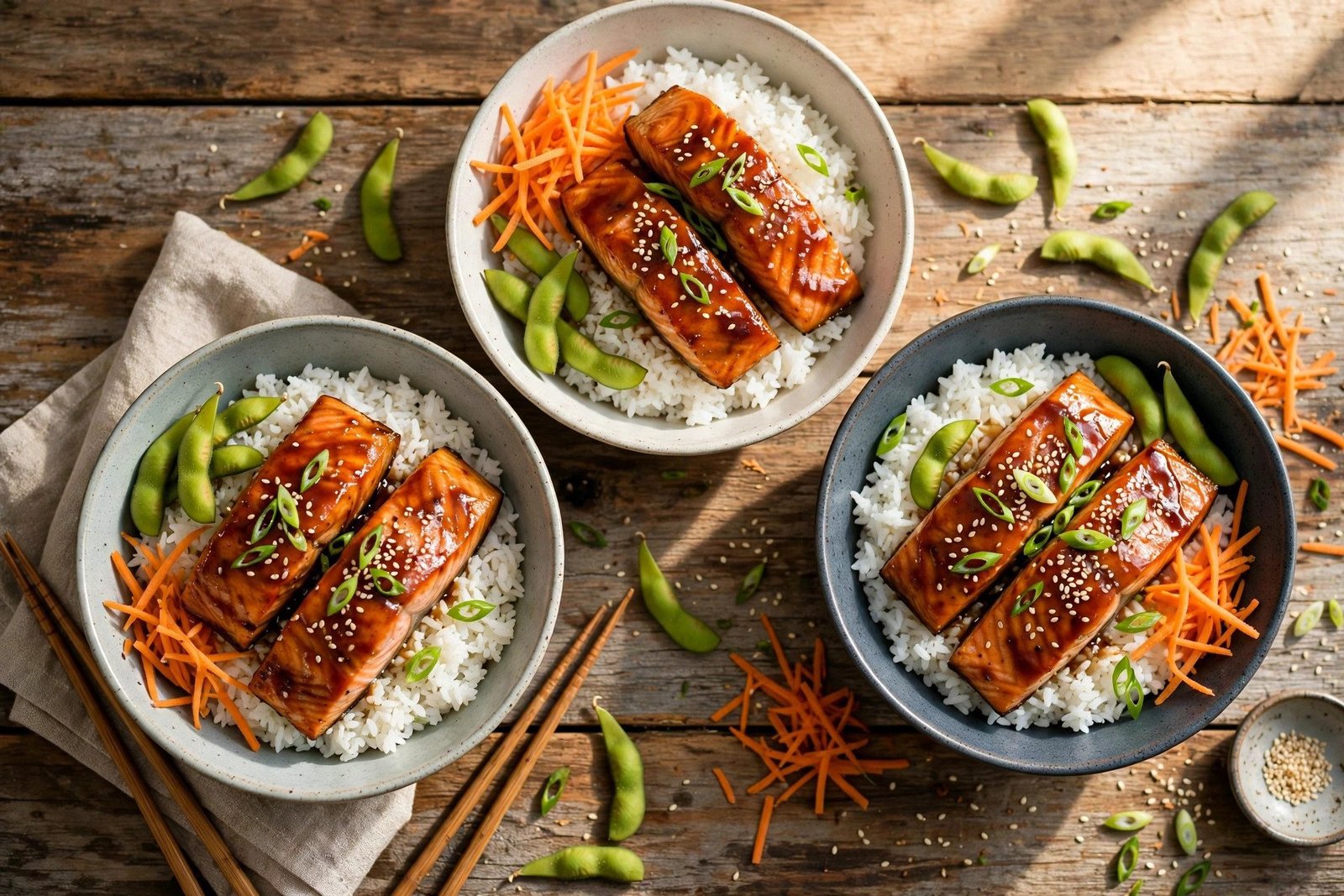
- Build the bowls. Divide the warm rice among four bowls. Set a salmon fillet on each, spoon over extra glaze, and arrange the edamame and shredded carrots alongside. Shower with green onions and sesame seeds, add a lime wedge, and serve right away while the teriyaki salmon is hot and glossy.
Notes
Pat the salmon very dry before searing — dry fish gets a golden crust instead of steaming. Watch the glaze closely; honey burns fast once the sauce turns syrupy.