Why You’ll Love This Korean Beef Bowls Recipe
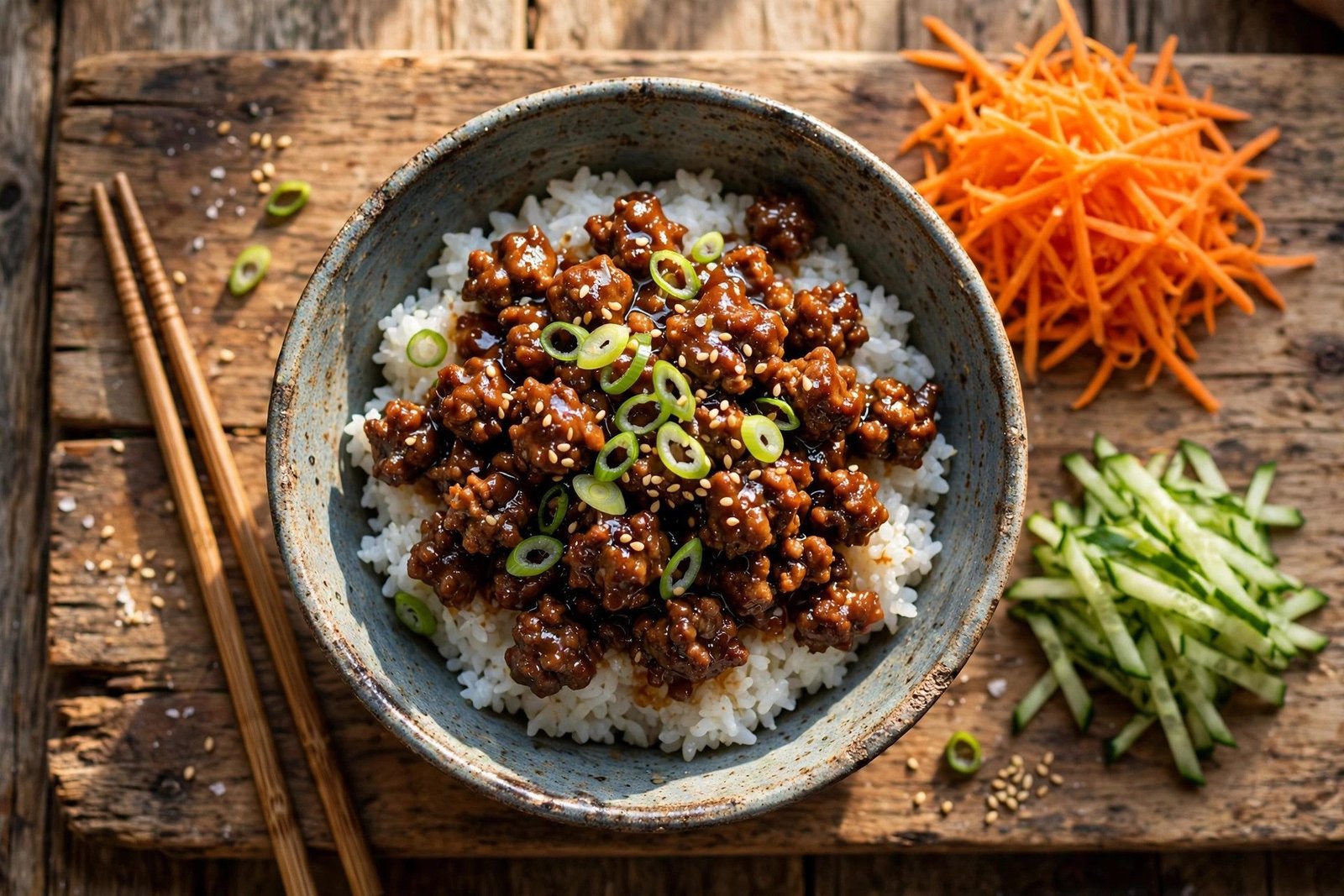
There are nights when I want takeout-level flavour without the takeout wait, and these Korean beef bowls are the answer I reach for most often. Ground beef, browned until the edges go crisp, tossed in a sweet-savoury bulgogi-style glaze that smells of garlic, sesame, and just enough brown sugar — then piled over hot rice with crunchy vegetables and a shower of green onions. The whole thing takes twenty minutes, uses one pan, and tastes like the Korean barbecue spot I keep meaning to drive to.
What I love most about Korean beef bowls is how forgiving they are. Ground beef cooks fast, the sauce comes together in one bowl while the beef browns, and there is almost nothing to get wrong. If the glaze is a little thick, add a splash of water. If you like heat, stir in a spoonful of gochujang. If dinner needs to stretch, add an extra cup of rice and another handful of vegetables. These Korean beef bowls bend to whatever your evening looks like, and they still land on the table in twenty minutes.
This is also one of the best budget dinners I know. A pound of ground beef, a few pantry sauces, and rice feed four people generously — and the leftovers are genuinely great the next day, which is more than I can say for most quick dinners. My kids pick out the carrots, I pile on extra kimchi, and everyone at the table builds their bowl the way they like it. That is the quiet magic of Korean beef bowls: one pan of beef, and dinner feels personal.
Korean Beef Bowls Ingredients
You only need a handful of pantry staples for these Korean beef bowls. Here is what goes in the pan, and why each one matters.
For the beef:
- Ground beef, 1 lb (80/20) — the star of these Korean beef bowls. The 80/20 blend has enough fat to brown beautifully and stay juicy; leaner beef works too, but add an extra drizzle of oil so it does not dry out.
- Vegetable oil, 1 tablespoon — a neutral oil for browning. You need less if your beef is fatty — start with half a tablespoon and add more only if the pan looks dry.
- Salt, 1/2 teaspoon and black pepper, 1/4 teaspoon — a light seasoning before the sauce goes in. The soy sauce brings most of the salt, so go easy here.
For the bulgogi-style sauce:
- Soy sauce, 1/4 cup — the salty, savoury backbone of the glaze. Low-sodium soy sauce works fine and lets you control the salt.
- Brown sugar, 2 tablespoons — the sweetness that makes the glaze sticky and gives the beef those dark, caramelised edges. It balances the soy sauce the way real bulgogi marinade does.
- Sesame oil, 1 tablespoon — a little goes a long way. It gives Korean beef bowls their unmistakable nutty, toasty aroma.
- Garlic, 4 cloves, minced — fresh garlic is essential here. Four cloves sounds like a lot, and it is exactly right once it hits the hot pan.
- Fresh ginger, 1 tablespoon, grated — the warm, bright note that keeps the sauce from tasting flat. Jarred ginger works in a pinch, but fresh is noticeably better.
- Gochujang, 1 tablespoon (optional) — the Korean chilli paste that adds gentle heat and depth. Leave it out for kids, or double it if you like your Korean beef bowls spicy.
- Rice vinegar, 1 tablespoon — a splash of brightness that keeps the sweet-savoury glaze balanced.
To serve:
- Cooked jasmine rice, 3 cups — the base of the bowl. The glaze pooling over hot rice is half the point of this dinner.
- Green onions, 2, sliced — for colour and a fresh bite on top.
- Sesame seeds, 1 teaspoon — the finishing touch. Toasted seeds taste best.
- Shredded carrots, 1 cup, and sliced cucumber, 1 cup — the crunch. They stay raw, so they cut through the rich beef beautifully.
- Kimchi, 1/2 cup (optional) — my favourite topping. The tangy, spicy bite is the perfect contrast to the sweet glaze.
How to Make Korean Beef Bowls
These Korean beef bowls move fast once the pan is hot, so whisk the sauce and slice the toppings before you turn on the stove. Then it is just fifteen minutes of cooking.

Step 1: Whisk the bulgogi-style sauce. In a small bowl, whisk the soy sauce, brown sugar, sesame oil, minced garlic, grated ginger, gochujang (if using), and rice vinegar until the sugar dissolves. Set it by the stove — you will need it in about six minutes, and this dish moves fast once the beef is in the pan.
Step 2: Brown the beef. Heat the vegetable oil in a large skillet over medium-high heat until it shimmers. Add the ground beef and break it into small crumbles with a wooden spoon. Cook for 5 to 6 minutes, stirring now and then, until the beef is deeply browned with crisp, dark edges. Do not stir it constantly — let it sit for a minute at a time so it actually browns instead of steaming. Drain off any excess fat if the pan looks greasy.
Step 3: Season and add the aromatics. Season the beef with the salt and black pepper. Push the beef to one side of the pan and add the garlic and ginger to the cleared spot, if you like — or simply stir them straight in. Cook for 30 seconds, just until fragrant. Garlic burns fast, so keep it moving.
Step 4: Pour in the sauce. Turn the heat down to medium. Pour the bulgogi-style sauce over the beef — it will bubble and steam right away. Stir well, scraping up the browned bits from the bottom of the pan. Those bits are pure flavour, and they melt straight into the glaze.
Step 5: Simmer until glossy. Let the sauce simmer for 2 to 3 minutes, stirring now and then, until it thickens into a sticky glaze that coats every crumble. The beef is done when it reads 160°F on an instant-read thermometer — the safe temperature for ground beef. If the glaze gets too thick, splash in a tablespoon of water.
Step 6: Build the bowls. Spoon hot rice into four bowls. Pile the Korean beef bowls’ glossy beef on top, then arrange the shredded carrots, sliced cucumber, and kimchi (if using) around it. Scatter with green onions and sesame seeds, and serve right away while the beef is still steaming.
Pro Tips for the Best Korean Beef Bowls
Let the beef brown properly. This is the single biggest factor in how your Korean beef bowls turn out. Ground beef that is stirred constantly turns grey and steams in its own juices. Leave it alone for a minute at a time, let the edges go dark and crisp, and the flavour difference is enormous.
Drain the fat before the sauce goes in. If your beef released a lot of fat, tip the pan and spoon it off — or drain the beef in a colander and return it to the pan. Too much fat makes the glaze greasy instead of glossy.
Use fresh ginger and garlic. The sauce only has a few ingredients, so each one has to pull its weight. Freshly grated ginger and minced garlic give these Korean beef bowls a brightness that jarred versions just cannot match.
Do not over-reduce the sauce. The glaze needs 2 to 3 minutes of bubbling to go from thin to sticky and glossy. If it still looks loose, give it another 30 seconds. But pull it off the heat the moment it coats the beef — the sugar keeps thickening as it cools, and an over-reduced glaze turns into candy.
Taste before you serve. Every soy sauce is a little different. Taste the beef after the glaze thickens and adjust: a splash more soy sauce if it needs salt, a pinch more brown sugar if it needs sweetness, or a squeeze of lime if you want brightness.
Korean Beef Bowls Variations
Once you have the base Korean beef bowls down, the recipe is easy to make your own.
- Make it spicy. Add a full tablespoon of gochujang plus a teaspoon of sriracha, and finish with a drizzle of chilli crisp. The heat plays beautifully against the sweet brown-sugar glaze, and it turns the dish into something closer to a proper Korean barbecue bowl.
- Add vegetables to the pan. After browning the beef, toss in sliced mushrooms, diced bell pepper, or a handful of broccoli florets and let them cook in the sauce for the last 3 minutes. They soak up the glaze and turn this into a true one-pan dinner.
- Swap the protein. Ground turkey or ground chicken work wonderfully with the same sauce — cook them the same way, just make sure they reach 165°F. For a vegetarian version, use crumbled extra-firm tofu or plant-based ground “meat” and follow the recipe exactly.
- Turn them into lettuce cups. Skip the rice and spoon the Korean beef bowls’ glossy beef into butter lettuce leaves with shredded carrots, cucumber, and extra green onions. It makes a lighter dinner that still tastes indulgent.
- Make it a noodle bowl. Swap the rice for cooked ramen or udon noodles, toss the glazed beef through the noodles, and top with a soft-boiled egg. The sauce clings to noodles even better than it clings to rice.
Storage and Meal Prep
These Korean beef bowls are best eaten fresh, while the glaze is still glossy and the beef is hot — but leftovers are genuinely great. Store the beef separately from the rice and vegetables in an airtight container in the fridge for up to 4 days. Reheat gently in a covered skillet over medium-low heat for 3 to 4 minutes, adding a splash of water if the glaze has thickened too much. The microwave works too, in 30-second bursts, but the skillet keeps the texture better.
For meal prep, Korean beef bowls are a dream. Cook a double batch of the beef on Sunday, portion it with rice and vegetables into four containers, and you have lunches for days. The sauce actually tastes better the next day, once it has had time to soak into the beef. The cooked beef also freezes well — cool it completely, freeze in a single layer in a freezer bag for up to 2 months, and thaw overnight in the fridge before reheating.
FAQ
Can I use a different ground meat for Korean beef bowls?
Yes. Ground turkey, ground chicken, or ground pork all work with the same bulgogi-style sauce. Turkey and chicken need to reach 165°F; pork and beef are done at 160°F. The flavour stays the same — sweet, savoury, and garlicky.
Is this recipe spicy?
Not as written. The only heat comes from the optional gochujang, so without it these Korean beef bowls are completely kid-friendly. If you want heat, start with 1 tablespoon of gochujang and add more to taste — or finish with sriracha at the table so everyone controls their own spice.
What is the best rice for Korean beef bowls?
Jasmine rice is my pick — it is fragrant, cooks fast, and soaks up the glaze beautifully. Short-grain white rice is the most traditional choice, and brown rice works too if you do not mind the extra chew. Whatever you choose, cook it while the beef browns so everything is hot at the same time.
Can I make Korean beef bowls ahead of time?
Yes. Cook the beef fully, let it cool, and refrigerate it in its glaze for up to 4 days. Reheat gently in a skillet — the glaze loosens up again and tastes just as good as fresh. Keep the rice and fresh vegetables separate until serving so nothing goes soggy.
What temperature should ground beef be cooked to?
Ground beef is safe and ready at 160°F, measured with an instant-read thermometer. According to the USDA Food Safety and Inspection Service, ground beef should always reach 160°F because grinding mixes bacteria through the meat — unlike a steak, where the outside is the only part exposed. Check the thickest crumbles if you are unsure.
Can I skip the brown sugar?
You can reduce it to 1 tablespoon, but I would not skip it entirely — the sugar is what makes the glaze sticky and gives the beef its caramelised edges. Honey works as a substitute (use the same amount), and it adds a slightly floral note that suits the ginger.
Ingredients
Method
- Whisk the soy sauce, brown sugar, sesame oil, garlic, ginger, gochujang (if using), and rice vinegar in a small bowl until the sugar dissolves.
- Heat the vegetable oil in a large skillet over medium-high heat. Add the ground beef and brown for 5 to 6 minutes, breaking it into small crumbles, until deeply browned with crisp edges. Drain off excess fat.
- Season with salt and black pepper. Add the garlic and ginger and cook 30 seconds until fragrant.
- Reduce the heat to medium and pour in the sauce. Stir well, scraping up the browned bits from the bottom of the pan.
- Simmer 2 to 3 minutes until the sauce thickens into a sticky glaze and the beef reads 160°F.
- Spoon hot rice into four bowls, pile the glazed beef on top, arrange carrots, cucumber, and kimchi around it, and garnish with green onions and sesame seeds.
Notes
The Bottom Line
These Korean beef bowls are the dinner I make when I want maximum flavour for minimum effort. Twenty minutes, one pan, a sauce from the pantry, and a sticky bulgogi-style glaze that makes plain rice taste like a treat. The beef stays juicy, the garlic and ginger are bold without being harsh, and the brown sugar ties it all together. Try it tonight.
If you love a fast beef dinner as much as I do, my quick beef and broccoli stir fry uses the same one-pan idea with a different sauce. For another weeknight beef favourite, try my 20-minute beef tacos, and if you want the same sweet-savoury magic with peppers, my 20-minute beef and pepper stir fry is on the table just as fast. For more nights like this, try our 12 easy family dinners quick enough for busy weeknights.