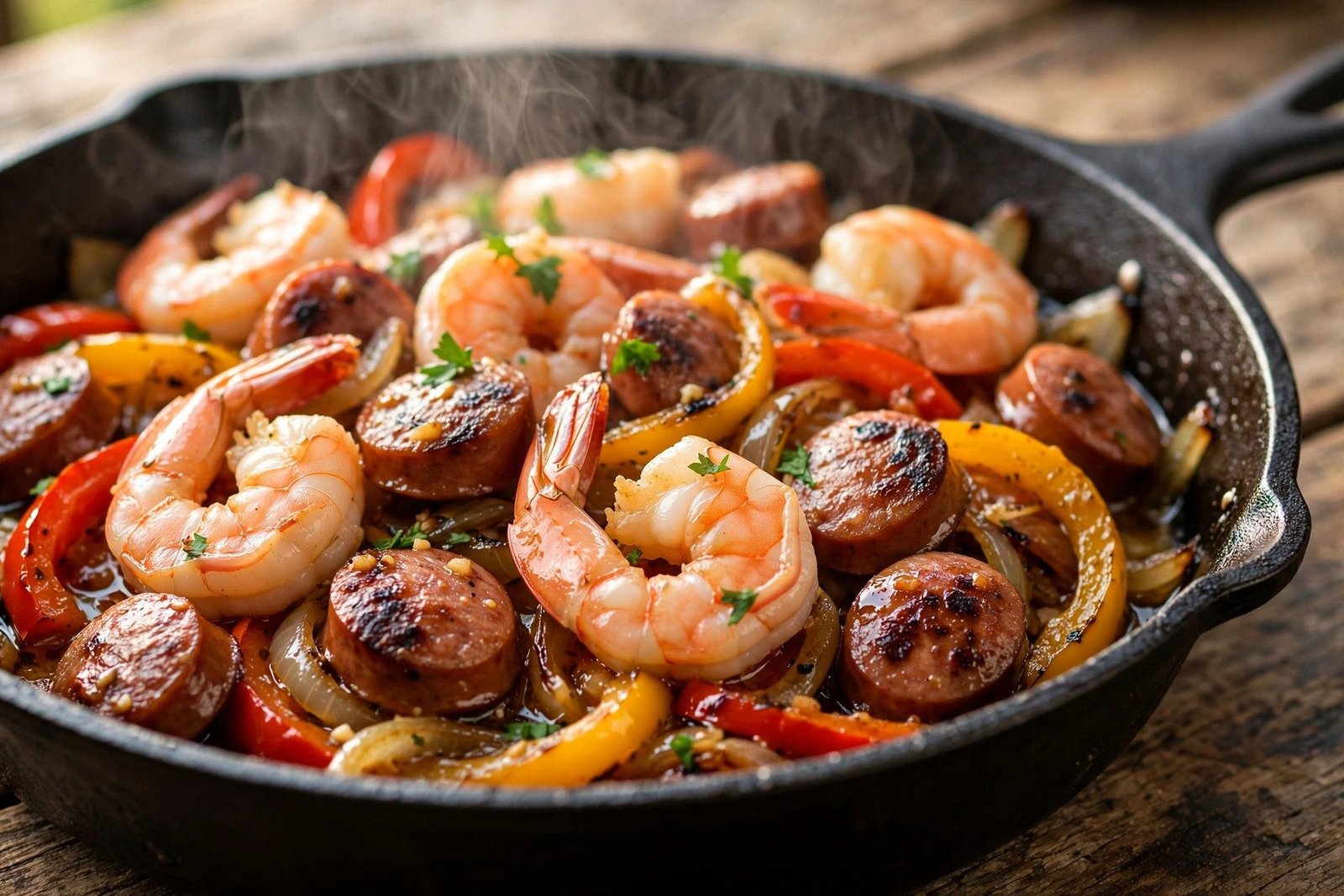
There are weeknight dinners that feel like a compromise, and then there is this shrimp and sausage skillet — the one where juicy shrimp, smoky sausage, and sweet charred peppers all land in the same pan and somehow taste like you planned it for hours. It takes twenty minutes, one skillet, and a handful of ingredients you probably already have. The shrimp cook in about three minutes, the sausage brings its own seasoning, and the garlicky butter sauce ties everything together.
I first threw this shrimp and sausage skillet together on a Friday night when I was too tired to cook but too hungry to order in. I had a bag of shrimp in the freezer, half a link of smoked sausage in the fridge, and two bell peppers that needed using up. Twenty minutes later we were eating straight out of the pan, mopping up the sauce with bread, and it has been one of my most-requested weeknight dinners ever since. It is the dinner I make when I want something that tastes like a treat but cooks like a Tuesday.
Why You’ll Love This Shrimp and Sausage Skillet
First, the flavor payoff is wildly out of proportion to the effort. The sausage renders a little of its smoky fat into the pan, and that fat becomes the cooking medium for the peppers and shrimp — so every bite of this shrimp and sausage skillet carries a little bit of everything. The smoked paprika and garlic deepen it further, and a squeeze of lemon at the end wakes the whole pan up.
Second, it is genuinely a one-pan, twenty-minute dinner. The sausage sears first, the peppers soften in the same pan, and the shrimp cook last in about three minutes flat. You will wash one skillet, one cutting board, and one knife. That is the whole cleanup, and on a busy weeknight that matters as much as the flavor.
Third, this shrimp and sausage skillet is endlessly flexible. Swap the peppers for zucchini or green beans, use andouille if you like heat, or toss in a handful of spinach at the end. Serve it over rice, with crusty bread, or straight from the pan with a fork. The core recipe stays the same, and it stays delicious. It also reheats well enough for lunch the next day, which is more than I can say for most shrimp dinners.
Shrimp and Sausage Skillet Ingredients
You only need a short list of everyday ingredients for this shrimp and sausage skillet, and most of them are probably already in your kitchen.
- 1 lb large shrimp, peeled and deveined — fresh or thawed frozen both work. Pat them very dry before they hit the pan; dry shrimp sear, wet shrimp steam.
- 12 oz smoked sausage, sliced into ½-inch rounds — kielbasa, andouille, or any smoked sausage you like. Andouille adds a gentle Cajun heat; kielbasa keeps it mild and kid-friendly.
- 2 tbsp olive oil — for searing the sausage and shrimp. The sausage will add its own fat to the pan as it cooks.
- 1 tbsp butter — stirred in with the garlic. Butter is what turns the pan juices into a proper sauce.
- 1 red bell pepper, sliced — sweet and colorful. It softens in about four minutes and picks up a little char at the edges.
- 1 yellow bell pepper, sliced — a second color makes the pan look as good as it tastes. Orange or green work too.
- 1 small red onion, sliced — it softens and sweetens in the pan, and its purple edges look beautiful against the shrimp.
- 3 garlic cloves, minced — fresh garlic only here. Garlic is the backbone of this shrimp and sausage skillet, and the jarred kind turns bitter fast in a hot pan.
- 1 tsp smoked paprika — the single most important spice in this recipe. It doubles down on the sausage’s smokiness and gives the sauce its warm color.
- ½ tsp Italian seasoning — a quiet background note that rounds out the peppers and onion.
- ¼ tsp red pepper flakes (optional) — a gentle warmth, not real heat. Leave it out if the kids are eating.
- ½ tsp kosher salt, ¼ tsp black pepper — season the shrimp before cooking. The sausage is already salty, so go easy on the salt.
- 1 tbsp fresh lemon juice — squeezed over the pan at the very end. It cuts the richness and makes the shrimp taste brighter.
- 2 tbsp chopped fresh parsley, for serving — the one garnish that actually matters here.
- Lemon wedges, for serving — for anyone who wants an extra squeeze at the table.
A quick note on the shrimp: shrimp are done the moment they curl into a C and turn opaque pink, which takes about 2 to 3 minutes. If they curl into a tight O, they are overcooked. You can read more about choosing and handling seafood safely on the FDA’s seafood safety page.
How to Make Shrimp and Sausage Skillet
This shrimp and sausage skillet comes together in six simple steps, and the whole thing happens in one pan.
Step 1: Season the shrimp. Pat the shrimp dry with paper towels — this is the step that decides whether they sear or steam. Season them with the salt, black pepper, and half of the smoked paprika. Set them aside while you heat the pan.
Step 2: Brown the sausage. Heat the olive oil in a large skillet over medium-high heat until it shimmers. Add the sliced sausage in a single layer and cook for 3 to 4 minutes, flipping once, until both sides are deep golden brown with crispy edges. The sausage will leave a layer of smoky, flavorful fat in the pan — that is liquid gold, do not wipe it out. Transfer the sausage to a plate.
Step 3: Soften the peppers and onion. Turn the heat down to medium and add the sliced peppers and red onion to the same skillet. Cook for 4 minutes, stirring now and then, until the peppers are tender with a few charred edges and the onion has softened. If the pan looks dry, add a drizzle more oil.
Step 4: Bloom the garlic and spices. Push the peppers to the edges of the pan and add the butter to the center. Once it melts, add the minced garlic, the remaining smoked paprika, the Italian seasoning, and the red pepper flakes if using. Cook for 30 seconds, stirring constantly. You want the garlic fragrant and just golden — it goes from perfect to burnt in about ten seconds, so stay at the stove.
Step 5: Cook the shrimp. Turn the heat back up to medium-high and add the seasoned shrimp in a single layer. Cook for 2 to 3 minutes, flipping once, until the shrimp are pink, opaque, and curled into a loose C. Do not walk away — shrimp go from perfect to rubbery in under a minute, and this is the one step in this shrimp and sausage skillet where timing really matters.
Step 6: Bring it all together. Return the sausage to the pan and squeeze the lemon juice over everything. Toss for 30 seconds so the sausage warms through and the sauce coats every piece. Take the pan off the heat, shower with the chopped parsley, and serve straight from the skillet with lemon wedges on the side.
Pro Tips for the Best Shrimp and Sausage Skillet
Dry the shrimp like you mean it. I mentioned it above, but it is worth repeating: shrimp straight from a thaw or a rinse carry a surprising amount of water, and water is the enemy of a good sear. Pat them dry, then pat them dry again. Dry shrimp hit the hot pan and brown in seconds; wet shrimp steam, turn grey, and never get that golden edge.
Do not overcook the shrimp. This is the single biggest difference between a great shrimp and sausage skillet and a disappointing one. Shrimp cook in 2 to 3 minutes, and they keep cooking for a few seconds after they leave the heat. Pull them the moment they turn pink and curl into a C — a tight O means they have gone too far. When in doubt, pull them early; the residual heat in the pan finishes the job.
Let the sausage do the seasoning work. Smoked sausage is already salty and spiced, and it shares that flavor with the whole pan. That is why this recipe only needs half a teaspoon of salt for a full pound of shrimp. Taste the finished shrimp and sausage skillet before adding any extra salt — you will usually find it does not need it.
Keep the heat high for the shrimp, gentle for the garlic. The two things that ruin this dish are burnt garlic and overcooked shrimp, and they both come from the same mistake: one heat setting for the whole cook. Medium heat for the garlic and spices, medium-high for the shrimp, and you will get both exactly right.
Use a big enough skillet. A 12-inch skillet is the right size here. If the pan is crowded, the peppers steam instead of charring and the shrimp pile up instead of searing. If your skillet is small, cook the shrimp in two quick batches — it only adds a minute.
Shrimp and Sausage Skillet Variations
Once you have the base shrimp and sausage skillet down, it is easy to make it your own:
- Cajun shrimp and sausage skillet: swap in andouille sausage, add 1 teaspoon of Cajun seasoning with the smoked paprika, and finish with sliced green onions instead of parsley. It is the closest thing to a weeknight jambalaya without the rice.
- Add rice and make it a meal: spoon the finished shrimp and sausage skillet over steamed rice or buttered orzo, letting the sauce soak in. If you love shrimp with rice, my 15-minute honey garlic shrimp stir fry uses the same fast-cooking rhythm.
- Make it a pasta dinner: toss the finished pan with 12 oz of cooked penne or linguine and a splash of pasta water. The garlicky butter sauce clings to pasta beautifully. If you are in a pasta mood, my 20-minute shrimp scampi with lemon and garlic is this recipe’s closest cousin.
- Add greens: stir in 2 big handfuls of baby spinach at the very end, just until wilted, about 1 minute. It adds color, nutrition, and another reason to feel good about dinner.
- Swap the sausage: kielbasa keeps it mild, andouille brings heat, and chicken sausage keeps it lighter. Even chorizo works — just cut back the smoked paprika, since chorizo brings its own.
- Make it a sheet pan dinner: toss everything with the oil and spices, spread it on a sheet pan, and roast at 425°F for 10 to 12 minutes, adding the shrimp for the last 5. Same flavors, even less cleanup.
What to Serve with Shrimp and Sausage Skillet
This shrimp and sausage skillet is a complete meal on its own, but it loves a little company. Crusty bread is the obvious move — there is no better use for a baguette than mopping a skillet of garlicky butter sauce. Garlic bread works too, and nobody will judge you for it.
For a fuller plate, spoon the skillet over steamed rice, buttered orzo, or mashed potatoes — anything that can soak up the sauce. A simple green salad with lemon vinaigrette cuts the richness nicely, and roasted green beans on the side add a fresh, crisp contrast. If you want a similar one-pan dinner with a different protein, my one-pan sausage and peppers is another weeknight favorite from the same playbook.
How to Store and Reheat Shrimp and Sausage Skillet
Store leftover shrimp and sausage skillet in an airtight container in the fridge for up to 2 days. Shrimp do not love being reheated, so keep the window short — this is a cook-it-and-eat-it kind of dinner, and the leftovers are a bonus, not the plan.
To reheat, warm it gently in a skillet over low heat with a splash of water or chicken broth, stirring just until hot through, about 2 to 3 minutes. Do not microwave it on high — high heat turns reheated shrimp rubbery fast. And do not freeze this one; frozen and thawed shrimp go soft, and the peppers lose their bite.
Frequently Asked Questions
Can I use frozen shrimp for this shrimp and sausage skillet? Yes — frozen shrimp work perfectly, and honestly most of us cook with them. Thaw them overnight in the fridge, or run them under cold water for 10 minutes in a colander. The important part is drying them thoroughly before they hit the pan, because thawed shrimp hold extra water and wet shrimp will steam instead of sear.
What kind of sausage is best for a shrimp and sausage skillet? Smoked sausage is the right call — kielbasa for mild, andouille for Cajun heat, or any good smoked pork sausage. Avoid fresh, uncooked sausage like Italian sausage links here; they need much longer to cook through, and by the time they are done the shrimp would be overcooked. If all you have is fresh sausage, brown it first and give it a full 8 to 10 minutes before moving on.
Why did my shrimp turn out rubbery? Almost always overcooking. Shrimp need only 2 to 3 minutes in a hot pan, and they keep cooking for a few seconds off the heat. Pull them the moment they turn pink and curl into a loose C. A tight O shape means they have gone too far. High heat and a short cook time are your friends — low heat and a long cook are what make shrimp tough.
Can I make this shrimp and sausage skillet ahead of time? You can prep everything ahead — slice the sausage and peppers, mince the garlic, season the shrimp — and keep it all in the fridge, then cook it in 20 minutes when you get home. I would not cook the whole dish ahead, though; shrimp are at their best the minute they come out of the pan. If you do have leftovers, reheat them gently as described above.
Is this shrimp and sausage skillet gluten-free? Yes, as written it is naturally gluten-free — just check that your sausage and Italian seasoning are certified gluten-free, and serve it with rice instead of bread or pasta. Most smoked sausages are gluten-free, but a few brands use wheat-based fillers, so it is worth a quick label check.
Can I add vegetables to this shrimp and sausage skillet? Absolutely. Zucchini, mushrooms, and green beans all work — add them with the peppers so they have time to soften. A handful of cherry tomatoes stirred in with the shrimp adds a burst of sweetness, and baby spinach wilted in at the end is always a good idea. Just keep the pan from getting crowded, or the vegetables will steam instead of char.

20-Minute Shrimp and Sausage Skillet
Ingredients
Method
- Pat the shrimp very dry and season with the salt, black pepper, and half the smoked paprika. Set aside.
- Heat the olive oil in a large skillet over medium-high heat. Brown the sausage in a single layer, 3–4 minutes, flipping once, until golden on both sides. Transfer to a plate, leaving the fat in the pan.
- Reduce heat to medium. Cook the peppers and red onion in the same skillet for 4 minutes until tender with charred edges.
- Push the peppers to the edges. Melt the butter in the center, add the garlic, remaining smoked paprika, Italian seasoning, and red pepper flakes. Cook 30 seconds until fragrant.
- Turn heat to medium-high. Add the shrimp in a single layer and cook 2–3 minutes, flipping once, until pink, opaque, and curled into a loose C.
- Return the sausage to the pan, squeeze the lemon juice over everything, and toss for 30 seconds. Remove from heat, garnish with parsley, and serve with lemon wedges.